You Won’t Believe What Portland’s Cityscape Hides
Portland isn’t just another West Coast city—it’s a dreamscape woven between misty mountains and urban charm. I walked its streets with no map, just curiosity, and found skyline views, hidden rooftops, and mist-covered bridges that stole my breath. This is a city where nature and architecture don’t compete—they collaborate. If you think cityscapes are all glass towers and traffic, wait until you see Portland’s version. Here, the skyline breathes. It shifts with the weather, hums with quiet creativity, and reveals itself in layers. From elevated lookouts to rain-slicked alleys, Portland offers a deeply personal kind of urban beauty—one that rewards patience, curiosity, and a willingness to wander.
The First Glimpse: Arriving in Portland After Sunset
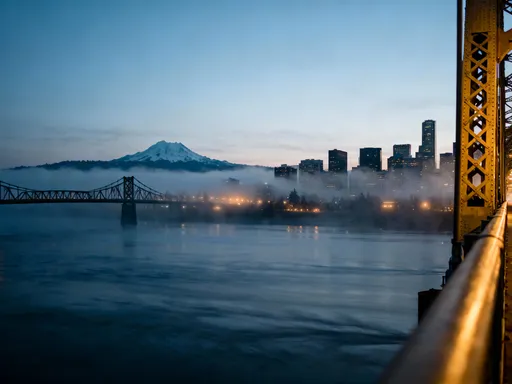
There is a moment, just after sunset, when Portland reveals itself not as a city but as a constellation. Approaching from the west side of the Willamette River, the skyline emerges through a veil of coastal fog—softened, almost dreamlike. The lights of downtown flicker like distant stars, their reflections trembling on the dark water. Skyscrapers that stand bold in daylight become silhouettes, their edges blurred by mist, their presence more poetic than imposing. This is not the harsh glare of a metropolis; it is a gentle invitation.
Two vantage points elevate this first encounter into something unforgettable: the Vista Bridge and Council Crest. The Vista Bridge, with its arched stone facade and Art Deco lampposts, frames the city like a living postcard. From its center, the view stretches across the river, capturing the rise of the West Hills and the glow of downtown nestled below. It is a favorite among photographers, not only for its symmetry but for the way it integrates nature and structure—ivy climbing the stonework, trees leaning in as silent observers.
Further south, Council Crest offers the highest public viewpoint in Portland, perched atop the Tualatin Mountains. Once a streetcar turnaround, it now serves as a panoramic sanctuary. On clear evenings, the city unfurls in every direction, from the jagged peak of Mount Hood in the east to the industrial glow of the port in the north. The timing is critical—dusk to nightfall, when the sky shifts from deep indigo to charcoal, and the city’s lights take center stage. This is when Portland stops being a place on a map and becomes a mood, a feeling, a quiet revelation.
What makes this first glimpse so powerful is its defiance of expectation. Most cities announce themselves with noise and scale. Portland whispers. It does not overwhelm; it intrigues. The fog, often seen as an obstacle, becomes a collaborator, diffusing light and softening edges. The hills, rather than flattening for development, are preserved, shaping the city’s rhythm. This moment teaches a lesson: in Portland, beauty is not in what you see immediately, but in what slowly reveals itself.
Downtown’s Urban Pulse: Where Steel Meets Street Art
Downtown Portland pulses with a quiet energy, a place where steel frames meet spray paint and glass towers stand beside century-old brick warehouses. This is not a city that erased its past for modernity; it layered them. Walk along Morrison Street or Burnside, and you’ll see this fusion in every block. A sleek office building with floor-to-ceiling windows might neighbor a converted factory adorned with a mural of a raven mid-flight, its feathers blending into geometric patterns. The contrast is not jarring—it is harmonious, a visual dialogue between progress and memory.
The architectural identity of downtown is defined by this balance. Buildings like the Pioneer Courthouse, with its Romanesque arches and sandstone façade, stand as anchors of history, while newer structures like the Oregon Convention Center showcase bold, modern lines and sustainable design. Yet, it is the in-between spaces—the alleyways, the side streets, the underpasses—that tell the most vivid story. These are the canvases for Portland’s renowned street art, where local and visiting artists transform blank walls into narratives of community, resistance, and wonder.
Amid this urban rhythm, the Lan Su Chinese Garden offers a counterpoint of stillness. Tucked away in the Old Town district, this 1.8-acre garden is a masterpiece of classical Chinese design, built with materials imported from Suzhou, China. Within its walls, the city fades. Koi glide through lotus-filled pools, pavilions rise above curved bridges, and the sound of water drowns out traffic. It is a reminder that a cityscape is not only about height and light but also about pause and reflection. The garden does not compete with the skyline; it complements it, offering a moment of calm that makes the surrounding energy feel more meaningful.
Public art, in particular, redefines how people experience the city. Murals in the Alberta Arts District or along the Eastbank Esplanade do not merely decorate—they communicate. A painting of a woman tending a garden might speak to urban renewal; a cascade of color on a parking garage might celebrate local biodiversity. These works turn rigid structures into storytelling spaces, where architecture becomes a backdrop for human expression. In Portland, the cityscape is not static. It evolves with every brushstroke, every new installation, every conversation it inspires.
Rooftop Revelations: Hidden Panoramas Above the Noise
One of Portland’s best-kept secrets lies above street level—on rooftops where the city unfolds like a living map. These elevated spaces offer intimacy rather than spectacle. You won’t find massive observation decks or ticketed entries here. Instead, you’ll discover quiet bars, hotel terraces, and community spaces where the skyline is not a postcard but a companion.
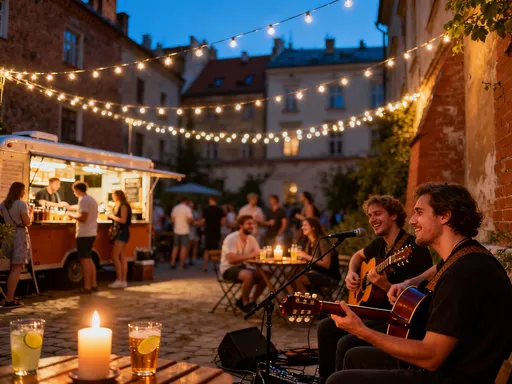
The Duniway Portland, a Curio Collection by Hilton, features a rooftop bar that captures the essence of this experience. As evening settles, guests sip craft cocktails under string lights while the city glows in every direction. The West Hills rise to the west, the Willamette curls beneath the Broadway Bridge, and downtown’s towers form a jagged horizon. What makes this view special is its accessibility—it feels exclusive without being exclusive. There is no velvet rope, no cover charge, just a relaxed atmosphere where conversation flows as easily as the wine.
Beyond hotels, some of the most striking vantage points require a bit more effort—or permission. Certain public buildings, like the Portland Building or the Central Library, have upper floors with panoramic windows, often overlooked by visitors. Local architects and urban planners sometimes host open-house events, offering rare access to rooftops with 360-degree views. These moments are fleeting but powerful, allowing you to see the city as a planner might—understanding how neighborhoods connect, how green spaces are distributed, and how light moves across the urban fabric.
What changes at this height is not just the view but the relationship to the city. From above, streets become patterns, cars turn into glowing dots, and the sound of traffic fades into a distant hum. You hear the wind, the occasional train whistle, the laughter from a nearby patio. This shift in perspective transforms the city from something you navigate into something you feel. The skyline, once a collection of buildings, becomes a living organism—breathing, shifting, responding to time and weather.
For those seeking solitude, a sunrise rooftop visit can be transformative. As the first light touches the peaks of the skyscrapers, the city awakens slowly. There is a stillness in those early hours, a sense of possibility. These rooftop experiences are not about conquering views but about finding connection—between self and city, between nature and structure, between movement and stillness.
Bridges as Sculptures: The Willamette’s Engineering Poetry
Portland’s bridges are more than infrastructure—they are sculptures in motion, each with its own rhythm and personality. Spanning the Willamette River, they link neighborhoods, carry light, and frame the city in unexpected ways. To walk across the Hawthorne Bridge at twilight is to step into a moving painting. The deck vibrates gently beneath your feet as cyclists and pedestrians pass, while below, the river reflects the orange and purple hues of the sky. To the north, the steel trusses of the Steel Bridge rise like industrial arches, a monument to early 20th-century engineering.
The Hawthorne Bridge, opened in 1910, is one of the oldest vertical-lift bridges in the country. Its charm lies in its functionality and its aesthetic—rust-colored girders, wooden planks underfoot, and a canopy of cables that catch the light at just the right angle. It is not sleek or modern, but it is beloved. Every evening, locals use it to commute, jog, or simply pause and watch the river. The view from its center captures the heart of the city: the dome of the Justice Center, the green roof of the Oregon Convention Center, and the distant silhouette of Mount St. Helens on clear days.
Just south, the Tilikum Crossing stands in striking contrast. Opened in 2015, it is Portland’s first major bridge built in over 40 years—and notably, it carries no private vehicles. Designed for transit, cyclists, and pedestrians, its sleek, cable-stayed design reflects a commitment to sustainability and accessibility. At night, LED lights embedded in the towers shift color with the seasons, turning the bridge into a dynamic piece of public art. Walking across it, you feel the city’s forward momentum, its belief in a greener, more connected future.
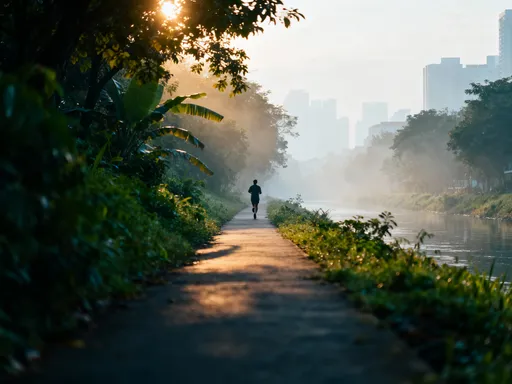
For photographers and casual observers alike, the best views of these bridges come from the Eastbank Esplanade and Tom McCall Waterfront Park. The Esplanade, a paved trail running along the east side of the river, offers unobstructed angles of each bridge’s underbelly—its beams, bolts, and rhythmic patterns. It is a favorite for long-exposure shots, where the motion of bikes and joggers becomes light trails against the dark water. From the Waterfront Park, the perspective is more panoramic, capturing the bridges in sequence, like chapters in a story.
What makes these bridges so integral to Portland’s cityscape is their dual role: they are functional and symbolic. They do not merely connect points A and B; they shape how the city is seen and experienced. From street level, they loom overhead; from the river, they stretch across like ribbons of steel. They are reminders that beauty and utility are not mutually exclusive—that a city can be both practical and poetic.
Nature’s Embrace: Forests, Hills, and Skyline Glimmers
Portland’s skyline does not exist in isolation. It is cradled by nature—by forests, hills, and volcanic remnants that rise from the urban sprawl like ancient sentinels. To understand the city’s true character, you must leave the streets and climb. Places like Forest Park, Powell Butte, and Mount Tabor offer vantage points where the boundary between city and wilderness dissolves.
Forest Park, one of the largest urban forests in the United States, spans over 5,000 acres and stretches along the western edge of the city. Its trails wind through Douglas firs, bigleaf maples, and fern-covered slopes. But it is not just a retreat—it is a viewing platform. At spots like the Lower Macleay Park trailhead or the Vista Point overlook, the city suddenly appears through the trees: a mosaic of rooftops, streets, and distant towers, framed by branches and dappled light. These glimpses are fleeting, almost secretive, reinforcing the idea that Portland is not imposed on nature but grown within it.
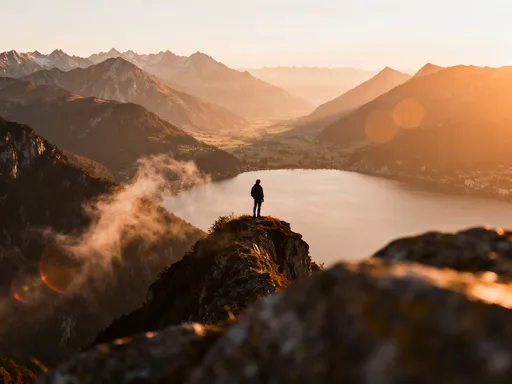
Further southeast, Powell Butte Nature Park sits atop an extinct volcanic cinder cone, offering one of the most comprehensive skyline views in the region. The hike to the summit is moderate, winding through meadows and woodlands before opening to a 360-degree panorama. On clear mornings, Mount Hood dominates the eastern horizon, its snow-capped peak glowing in the sunrise. To the west, the city stretches toward the Coast Range, its layout visible in the grid of neighborhoods and the ribbon of the Willamette. This is the kind of view that puts Portland in context—not as a standalone city, but as part of a vast, living landscape.
Mount Tabor, another volcanic cinder cone turned public park, provides a more accessible but equally powerful experience. Once a reservoir site, it now hosts walking paths, stone staircases, and open lawns. From its highest point, the downtown skyline rises across the trees, framed by the park’s Romanesque aqueduct and the canopy of oaks. It is a favorite for sunrise visits, when the city is still cloaked in mist and the first light turns the skyscrapers into golden silhouettes.
What these natural lookouts share is a sense of revelation. They do not offer curated views behind glass; they require effort, presence, and timing. The best light comes during the “blue hour”—just before sunrise or after sunset—when the sky shifts into soft gradients of indigo and lavender. Parking is available at all three locations, and trails are well-marked, making them suitable for families, hikers, and photographers alike. More than scenic spots, they are essential to understanding Portland’s identity: a city shaped not despite its landscape, but because of it.
Neighborhood Texture: Alberta, Mississippi, and the Beauty of the Unplanned
While skylines capture the city’s vertical ambition, its soul lives at street level—in neighborhoods like Alberta, Mississippi Avenue, and Sellwood, where charm is not designed but discovered. These districts reject uniformity. They thrive on irregularity: crooked sidewalks, mismatched facades, trees growing through fences, and front porches that invite conversation.
The Alberta Arts District, centered along Northeast Alberta Street, is a testament to organic growth. Once an industrial corridor, it transformed into a hub of galleries, boutiques, and cafes. Murals cover entire blocks, changing with the seasons as new artists contribute to the evolving canvas. On the last Thursday of every month, the neighborhood hosts First Thursday, a street festival where galleries open their doors, musicians play on corners, and food carts line the sidewalks. It is a celebration of community, not spectacle—a reminder that a city’s character is built in its everyday moments.
Mississippi Avenue, in the King neighborhood, shares a similar energy. Lined with independent bookstores, vintage shops, and farm-to-table restaurants, it feels more like a small town than a city street. The architecture is a mix of Craftsman bungalows and converted storefronts, each with its own personality. Bicyclists weave through traffic, and pedestrians linger at crosswalks, chatting with neighbors. This is a place designed for slowness, for connection, for the unplanned encounter.
What makes these neighborhoods integral to Portland’s cityscape is their resistance to predictability. Unlike downtown, where grids and zoning shape the layout, these areas evolved from the ground up. They are not curated for tourists but lived in by residents. Yet, they welcome visitors with openness. Bike lanes and pedestrian paths encourage exploration, turning a simple walk into a journey of discovery. You might stumble upon a hidden garden, a pop-up art show, or a porch swing with a “please sit” sign.
These streets remind us that a city is more than its skyline. It is the texture of its sidewalks, the sound of its trees, the rhythm of its daily life. In Portland, the unplanned is not a flaw—it is a feature. It is where authenticity resides, where the city feels not like a destination, but like a home.
Light, Weather, and Mood: How Portland Paints Its Own Portrait
Portland’s cityscape is never the same twice. It changes with the light, the season, the hour. This is a city defined not by constant sunshine but by atmosphere—by the way fog wraps around bridges, rain glistens on cobblestones, and winter light filters through bare branches. The weather is not an inconvenience; it is a collaborator in the city’s aesthetic.
In winter, the sky often hangs low, a blanket of soft gray that diffuses light and mutes color. Buildings appear closer, streets feel more intimate. This is not a time for bold contrasts but for subtlety—the warm glow of café windows, the reflection of streetlamps on wet pavement, the quiet hush after a light snowfall. Photographers know this is when the city reveals its moody soul, when every corner feels like a film still.
Summer, in contrast, brings golden haze and long evenings. The sun sets late, painting the West Hills in amber and setting the river on fire. Rooftop bars fill up, parks buzz with activity, and the city feels expansive, alive. But even in summer, the Pacific Northwest light remains soft—never harsh, always diffused. It is a light that flatters, that enhances texture without erasing shadow.
Spring and fall are fleeting but magical. In April, cherry blossoms bloom along the Eastbank Esplanade, their pink petals drifting onto the path like confetti. In October, fog returns, curling through the trees at Mount Tabor, turning the city into a watercolor. These transitions are not just seasonal—they are emotional. They shape how people move through the city, how they feel in it.
Portland’s moodiness is not a flaw; it is its signature. It teaches patience. It rewards attention. A rainy day might seem dull at first, but look closely: notice how the wet streets mirror the skyline, how the mist softens the edges of buildings, how the city becomes a study in reflection and contrast. This is a place where beauty is not shouted but whispered—and those who listen are rewarded.
Conclusion
Portland’s cityscape defies the typical urban narrative. It doesn’t shout with neon or height but whispers through fog-laced bridges, rooftop gardens, and hillsides where trees and buildings grow side by side. More than a collection of structures, it’s a living composition shaped by climate, culture, and quiet innovation. To experience it is to rethink what a city can be—not conquered in a day, but felt over time. Go, look closely, and let the skyline surprise you.