You Won’t Believe What I Found Driving Through Monaco’s Urban Jungle
Driving through Monaco isn’t just about fast cars and luxury—it’s a full sensory experience. I hit the coastal roads with no GPS, just curiosity, and discovered how this tiny principality masterfully blends urban design with natural beauty. From cliffside tunnels to hidden plazas, every turn revealed something unexpected. This is not just a playground for the rich—it’s a thoughtfully crafted cityscape that rewards slow, mindful exploration. The way the city integrates the Mediterranean coastline with vertical architecture, green spaces, and seamless mobility creates a rhythm unlike any other urban environment. What stands out most is not the glamour, but the intentionality behind every curb, every lane, every pocket of calm nestled between towers. Driving here becomes less about transportation and more about revelation.
The First Impression: Arriving by Car
Entering Monaco by road is like stepping into a carefully choreographed transition from the familiar to the extraordinary. As the A8 motorway bends eastward from Nice, the landscape begins to shift—hills rise more steeply, the air grows crisper, and the Mediterranean appears in flashes between buildings. The moment you cross the border, marked by a modest sign and a subtle change in road texture, the density increases almost instantly. Gleaming high-rises rise from terraced cliffs, their glass facades reflecting sunlight in dazzling patterns. Palm trees line wide boulevards, and the scent of saltwater mingles with the faint hum of electric vehicles gliding past.
What strikes most is the contrast: on one side, the open expanse of the sea stretching to the horizon; on the other, a vertical city climbing the hills with remarkable precision. Yet, despite its compact size—just over two square kilometers—Monaco does not feel overcrowded. The urban design ensures a balance between built environment and open space. As traffic funnels through the main entry points, particularly near the La Turbie junction, the flow is surprisingly smooth. This is no accident. Monaco’s planners have long prioritized both efficiency and aesthetics, designing transitions that ease drivers into the city’s rhythm rather than overwhelming them.
Tunnels play a crucial role in this experience. The first major one, the Boulevard Albert II tunnel, slices through the rock beneath the port area, guiding vehicles seamlessly from France into the heart of the principality. These underground passages are not mere functional conduits—they are engineered with lighting, ventilation, and acoustics that make the drive feel calm and controlled. Elevated roads, such as the Voie Rapide, further separate through-traffic from local movement, reducing congestion in residential zones. The integration of greenery along these routes—vertical gardens, climbing ivy, and rooftop plantings—softens the urban hardness and signals a city that values both form and function.
Even the way signage is placed feels deliberate. Directional markers are clear but unobtrusive, using minimalist fonts and consistent color coding. There’s no visual clutter, no competing advertisements vying for attention. This restraint enhances focus, allowing drivers to absorb the surroundings without distraction. The first impression, then, is not one of chaos or excess, but of harmony—a city that has mastered the art of making density feel light, ordered, and inviting.
Navigating the Micro-State: Roads as Urban Design
With only 2 square kilometers of land, Monaco’s street network is a masterclass in spatial efficiency. Every meter is accounted for, every route designed with a purpose. Unlike sprawling cities where navigation can feel arbitrary, Monaco operates on a logic that rewards attention. One-way loops guide traffic in smooth arcs through districts like La Condamine, Monte Carlo, and Fontvieille, minimizing cross-flows and reducing the likelihood of bottlenecks. Roundabouts, rather than traffic lights, dominate key intersections, ensuring continuous movement while maintaining safety.
What makes driving through Monaco especially revealing is the way it exposes architectural details often missed by pedestrians or public transit users. At low speeds—encouraged by traffic calming measures—drivers notice the textures of building facades: the geometric elegance of Art Deco structures in Monte Carlo, the ornate balconies of 19th-century townhouses tucked into narrow lanes, and the sleek modernism of recent developments like the Hermitage Plaza. These visual layers tell the story of a city that evolves without erasing its past.
The multi-level nature of the city adds another dimension to navigation. Roads spiral upward and downward, connecting different elevations through ramps, viaducts, and hidden connectors. In Fontvieille, for example, a series of stacked roads and pedestrian bridges create a vertical neighborhood where residents live, shop, and commute without needing to descend to sea level. This stratification allows Monaco to accommodate more people and functions without horizontal sprawl—a model of compact urbanism.
Driving also reveals how thoughtfully the city manages sightlines and vistas. Curves in the road are timed to reveal panoramic views of the harbor or the sea at precise moments, creating a sense of discovery. Even in the most built-up areas, there are deliberate gaps—open plazas, small parks, or terraced gardens—that break the visual monotony and provide moments of relief. This attention to experiential detail shows that Monaco’s planners think not just in terms of traffic flow, but in terms of human perception and emotional response.
Parking Paradox: Where to Stash Your Car
One of the most common concerns for visitors is parking. On the surface, it seems nearly impossible—how can a city this small accommodate so many vehicles? The answer lies beneath: Monaco has developed an extensive network of underground parking facilities, many of which are hidden beneath public squares, residential buildings, and even repurposed historical structures. These subterranean garages are not afterthoughts but integral parts of the urban fabric, designed to keep streets uncluttered and pedestrian zones accessible.
Public parking options are plentiful, though not always intuitive. Rates vary by location and time of day, with prices averaging between 3 and 5 euros per hour in central areas. Long-term parking is more affordable, especially in outer districts like La Rousse or Larvotto. Real-time availability can be checked through official mobile apps, which display open spots in municipal garages across the city. These tools are invaluable, particularly during peak seasons when demand is high.
Timing also plays a role in securing a spot. Early mornings and weekdays tend to be less crowded, while evenings and weekends—especially during events like the Formula 1 Grand Prix or the Monaco Yacht Show—can be extremely competitive. Some hotels offer valet parking services, which, while more expensive, provide peace of mind and eliminate the stress of navigating tight underground lanes.
It’s important to be aware of local regulations. Some parking meters accept only French or Monégasque bank cards, and credit card compatibility can be inconsistent. Fines for violations are strictly enforced and can reach up to 135 euros for improper parking or expired tickets. Tourists are advised to read signage carefully and avoid assumptions based on practices in other European cities. Despite these challenges, the system works—because it has to. With limited space, Monaco has no room for inefficiency, and its parking infrastructure reflects that necessity.
Beyond the Glamour: Hidden Urban Spaces
Most visitors associate Monaco with Casino Square, the harbor full of superyachts, and the Grand Prix circuit. These are undeniably iconic, but they represent only one layer of the city. Away from the postcard views, there are quieter, more intimate spaces that reveal a different side of urban life. These hidden pockets demonstrate how Monaco carves out room for stillness and reflection, even in one of the densest cities on Earth.
One such place is the Japanese Garden in the Larvotto district. Tucked behind apartment buildings and accessible via a modest staircase, this tranquil space features koi ponds, stone lanterns, and carefully pruned pine trees. The sound of water and birdsong creates a stark contrast to the nearby traffic, offering a sensory reset. It’s a deliberate act of urban acupuncture—inserting a small but powerful element of nature into an otherwise built environment.
Another example is the network of staircases connecting Monaco-Ville, the historic old town perched on a rocky promontory, to the port below. These pedestrian pathways, often lined with bougainvillea and shaded by awnings, serve both practical and aesthetic purposes. They allow residents to move between elevations without relying on vehicles, while also offering unexpected views of the sea and the cityscape. Some of these stairs are centuries old, their worn stone steps bearing witness to generations of daily life.
Even small plazas function as breathing spaces. Place d’Armes, though not hidden, is often overlooked by tourists rushing to the palace. Yet it buzzes with local activity—parents watching children play, seniors reading newspapers at café tables, vendors selling fresh flowers. These micro-spaces, though modest in size, are essential to the city’s livability. They prove that density does not have to mean deprivation—that with thoughtful design, even the smallest corners can become places of connection and calm.
Coastal Drives and Tunnel Experiences
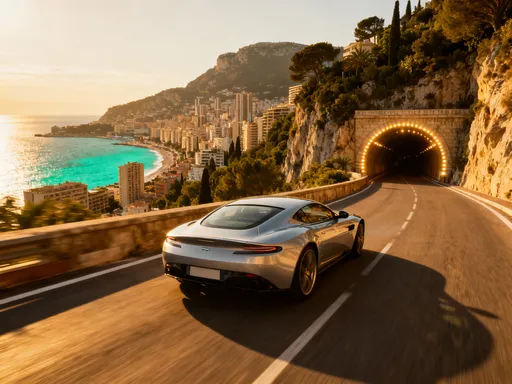
The coastal roads of Monaco are among the most scenic in Europe. The Route de la Moyenne Corniche, in particular, offers sweeping views of the Mediterranean, with cypress trees framing the horizon and yachts dotting the blue waters below. But perhaps the most surprising experiences are found not in the open air, but underground. Monaco’s tunnels are not just utilitarian passages—they are feats of engineering and design that transform commuting into something closer to a curated journey.
The Boulevard Albert II tunnel, recently upgraded and extended, is a prime example. Stretching over a kilometer beneath the port, it features dynamic LED lighting that shifts in color and intensity, creating a sense of movement and rhythm. The walls are smooth, the acoustics controlled, and the ventilation system ensures fresh air throughout. Rather than feeling claustrophobic, the drive feels almost meditative—an illuminated corridor that separates the driver from the chaos often associated with urban traffic.
Other tunnels, like the ones leading into the Larvotto district, incorporate artistic elements. Murals, subtle textures, and carefully placed lighting enhance the experience, making the underground routes feel like extensions of the city’s cultural identity. These spaces could have been purely functional, but instead, they reflect a philosophy that even infrastructure should contribute to well-being and beauty.
What’s remarkable is how these tunnels integrate with the surface city. Exits open directly into plazas, parks, or building lobbies, blurring the boundary between underground and aboveground life. This seamless connectivity allows Monaco to maximize land use without sacrificing accessibility. The tunnels don’t hide the city—they reveal another dimension of it, one that is efficient, elegant, and surprisingly human-centered.
Urban Life in Motion: People, Pace, and Flow
Despite its reputation for luxury and exclusivity, Monaco functions as a real city with real rhythms. Residents go to work, children walk to school, deliveries are made, and public services operate with quiet efficiency. Driving through the streets offers a unique vantage point to observe how different modes of movement coexist. Cyclists ride in designated lanes, often protected by barriers or elevation changes. Delivery vans use underground service roads to access buildings without disrupting surface traffic. Pedestrians move along shaded walkways, many equipped with escalators that connect different levels of the city.
The pace of life is notably calm. Rush hours are short—typically limited to early morning and late afternoon—and traffic calming measures, such as speed bumps, narrowed lanes, and frequent roundabouts, ensure that vehicles move at safe speeds. This is not a city built for speed, but for precision and coexistence. Even during major events, the flow remains orderly, thanks to meticulous planning and real-time traffic management systems.
Public transportation integrates seamlessly with private vehicle use. The Métropole Express bus network connects key districts, while the future extension of the TEL (Tramway Électrique Ligérien) promises to further enhance mobility. Park-and-ride options encourage drivers to leave their cars at the edges of the city and switch to public transit for the final leg of their journey. This multi-modal approach reduces congestion and supports sustainability without sacrificing convenience.
What emerges is a city that moves with intention. There is no sense of hurry, no aggressive driving, no honking. Instead, there is a collective understanding that space is limited and must be shared. This social contract—unspoken but deeply embedded in the urban culture—allows Monaco to function smoothly despite its density. Driving here becomes less about control and more about participation in a finely tuned system.
Why This Matters: Lessons from a City That Works
Monaco offers more than just scenic drives and luxury living—it presents a compelling model for urban planning in an age of growing density and environmental constraints. At just two square kilometers, it proves that small spaces can support vibrant, functional, and beautiful communities when designed with foresight. Its success lies not in wealth alone, but in a consistent commitment to integrating transportation, architecture, and nature in ways that serve people first.
Other cities can learn from Monaco’s emphasis on compact design. By building upward and inward rather than outward, it avoids urban sprawl and preserves surrounding natural areas. Its multi-level infrastructure maximizes utility without sacrificing aesthetics. Green spaces are not add-ons but essential components of the urban matrix, improving air quality, mental well-being, and social cohesion.
Safety and efficiency are not compromised for style; they are enhanced by it. Roundabouts, one-way systems, and intelligent traffic management reduce accidents and improve flow. Underground parking and service roads keep surface areas pedestrian-friendly. Real-time digital tools support navigation and resource allocation, showing how technology can serve urban life without overwhelming it.
Most importantly, Monaco demonstrates that high-density living does not have to feel oppressive. Through careful attention to light, scale, texture, and human experience, it creates moments of beauty and calm within the urban fabric. Whether it’s a sunlit plaza, a hidden garden, or a softly lit tunnel, the city is full of small gestures that acknowledge the emotional needs of its inhabitants.
Driving through Monaco is not just a journey across space—it is a lesson in how cities can work better. It challenges the assumption that growth must mean chaos, that luxury must exclude functionality, or that density must erase nature. Instead, it offers a vision of urban life that is elegant, efficient, and deeply human. For anyone who has ever felt overwhelmed by the disorder of modern cities, Monaco stands as a quiet but powerful reminder: with the right design, even the smallest places can inspire the biggest ideas.